
Facial implants are used to enhance or restore the structure and contours of the face. They can add definition to areas such as the cheeks, chin, or jawline, helping to create more balanced proportions and improve overall facial harmony. For some people, facial implants address naturally weaker bone structure; for others, they restore volume and definition lost through ageing or weight changes. The procedure can be performed on its own or combined with other facial surgeries, such as a facelift or rhinoplasty, for more comprehensive results.

Plastic & Reconstructive Surgery - Face
Facial Implants
Chin, Cheek, Mandibular Angles
Facial implants are used to enhance or restore the structure and contours of the face. They can add definition to areas such as the cheeks, chin, or jawline, helping to create more balanced proportions and improve overall facial harmony. For some people, facial implants address naturally weaker bone structure; for others, they restore volume and definition lost through ageing or weight changes. The procedure can be performed on its own or combined with other facial surgeries, such as a facelift or rhinoplasty, for more comprehensive results.
Procedure Overview
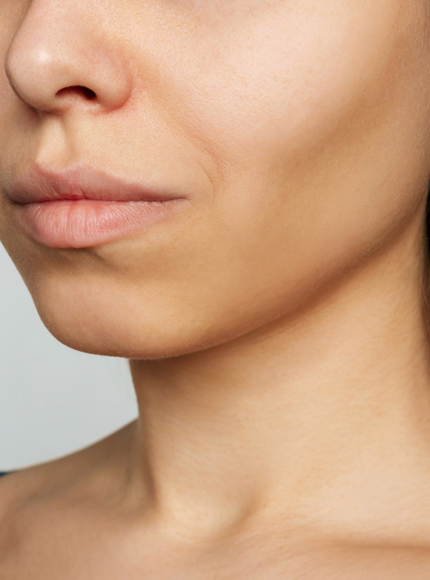
Facial implants may be suitable for men and women who wish to enhance or restore facial contours in specific areas. Common reasons include a small or recessed chin, flat or underdefined cheeks, or a jawline that lacks definition. Candidates should be in good general health, have no untreated skin infections or dental issues affecting the surgical area, and hold realistic expectations about the likely outcome. Facial implants can also be considered after injury or reconstructive surgery to restore symmetry.

Aim
The surgery aims to create better balance in the face by enhancing volume or definition in key structural areas.
At A Glance
Tailored to each patient, this procedure offers transformative results for improved confidence.
Expected results:
More defined and balanced facial contours
Treatment time:
1–2 hours
Anaesthesia:
General or local anaesthesia
Recovery time:
1–3 weeks
Return to work:
1–2 weeks
Lifetime of procedure:
Long-lasting or permanent

CONSULTATION
Your consultation will involve a detailed discussion of your concerns and goals. The surgeon will assess your facial structure, bone proportions, and skin quality, and may take photographs for planning purposes. They will explain the different implant options available, including size, shape, and material, as well as where and how the implant would be placed. You will have the opportunity to view before-and-after images of previous patients, discuss the recovery process, and ask any questions you may have. The consultation will also cover potential risks, benefits, and alternative treatments, helping you to make a confident, informed decision about whether facial implants are right for you.
PREOP PREPARATION
Setting aside time to focus on preparation before you attend for surgery is important if you wish a successful outcome. Healthy eating (avoiding refined sugars, and ultra processed foods), reducing alcohol consumption and stopping smoking, vaping or taking recreational drugs is extremely important in the 6 weeks running up to surgery.
If you are unwell for any reason in the run up to surgery it is important to let your team know as occasionally it is safer to postpone any treatment until you are in full health. Please let your surgeon know if you are taking any herbal remedies, or blood thinners such as aspirin during your pre-op assessment as these may need to be stopped before surgery.
SURGERY
The procedure is usually performed under general anaesthetic, although local anaesthetic with sedation may be used for smaller implant placements. The surgeon makes small, discreet incisions – often inside the mouth or in natural skin creases – to create a pocket for the implant. The chosen implant is carefully positioned and secured, and the incision is closed with dissolvable stitches. The aim is to achieve natural-looking results with minimal visible scarring.
RECOVERY
You will typically be able to go home on the same day or after an overnight stay, depending on the extent of surgery. Swelling, bruising, and mild discomfort are common in the first few days, and can be managed with pain relief medication and cold compresses. Most patients can return to work or social activities within one to two weeks, but strenuous activity should be avoided for four to six weeks. It is important to follow all post-operative care instructions and attend follow-up appointments so your surgeon can monitor healing and ensure optimal results.

Related Concerns
This procedure can treat the following conditions providing optimal outcomes.


Frequently Asked Questions
Is facial implant surgery safe?
Facial implant surgery is safe when performed by a skilled surgeon. As with all procedures, risks include infection, bleeding, shifting of the implant, or reaction to the implant material. These risks will be fully explained at your consultation.
Will I feel the implant?
Initially, there may be some awareness of the implant as swelling subsides. Once healing is complete, most patients do not feel the implant, and it integrates well with natural tissues.
How long do results last?
Facial implants are designed to be permanent. They do not degrade over time and remain stable unless removed or replaced.
Will there be visible scars?
Most incisions are made inside the mouth or under the chin, so scarring is minimal or hidden from view.
What is the recovery like?
Swelling and tightness are common in the first few days. You may be advised to follow a soft diet if the incisions are inside the mouth. Most people return to work after 1–2 weeks.
Can implants shift or move?
Implants are typically anchored securely. However, trauma or insufficient healing may lead to minor shifting. Your surgeon will give guidance to minimise this risk.


Guide Price
The cost for each procedure is tailored to each patients needs post a consultation.
Prices start from

Related Procedures
You may also be interested in the following procedures performed by a top specialists in a state-of-the-art setting.
From advanced surgical procedures to less invasive treatments, our expert team are here to ensure you receive safe, personalised and effective care.




Our Professionals
With decades of expertise, your specialist team will guide you through every aspect of your procedure.